
Authors

The New Seers

Carlos recounts his arrival in Oaxaca where he meets don Juan, who immediately shifts him into a state of heightened awareness. Don Juan begins to explain the history of Toltec seers, distinguishing between the ancient Toltec seers—powerful sorcerers obsessed with their “seeing” that ultimately led to their downfall—and the new seers, who are warriors of total freedom. The new seers, having learned from the mistakes of the old, emphasize stalking, dreaming, and intent, and use their heightened awareness to seek freedom rather than control. Don Juan also explains that “seeing” is a profound form of knowing, not merely visual perception, and that the world is composed of “Eagle’s emanations” rather than solid objects. He emphasizes that the new seers have developed a systematic way to understand awareness that was lacking in the ancient Toltecs, who were destroyed by their own pursuits.

The New Seers Read More »

Petty Tyrants

Don Juan begins explaining the mastery of awareness by focusing on “petty tyrants,” external tormentors who serve as a warrior’s training ground. He deliberately provokes la Gorda to illustrate how self-importance is the greatest enemy of a warrior. Don Juan details the “attributes of warriorship”—control, discipline, forbearance, timing, and will—and explains how these are used to combat self-importance and harness energy. He recounts his own brutal experience with a “king-size petty tyrant” (a sugar mill foreman) and how his benefactor, the nagual Julian, used this ordeal to teach him these attributes. The goal is not just to survive, but to gain joy and impeccability in the face of adversity. Don Juan emphasizes that true defeat for a warrior lies in succumbing to negative emotions and self-pity, rather than employing strategy and detachment, and that confronting petty tyrants is essential for tempering the spirit and preparing for the unknown.

Petty Tyrants Read More »

The Eagle’s Emanations

Carlos and don Juan continue their discussion on awareness, specifically focusing on the first truth: the world is not composed of objects but of the “Eagle’s emanations.” Don Juan clarifies the distinction between the “known,” “unknown,” and “unknowable,” emphasizing that the unknown is within human reach through perception, while the unknowable remains beyond comprehension. He explains that the ancient seers made a crucial mistake by confusing these categories, leading to their downfall, a mistake corrected by the new seers who learned to map the unknown through controlled “seeing.” Don Juan describes the Eagle as the indescribable force that bestows awareness on sentient beings and devours it at death, an interpretation that both fascinates and terrifies Carlos. He further elucidates that human perception utilizes only a minute fraction of these emanations, and that “seeing” involves sensing the Eagle’s emanations as “filaments of light” that are inherently aware.
The Eagle’s Emanations Read More »

The Glow of Awareness

Don Juan and Don Genaro discuss the “glow of awareness,” explaining that perception is an alignment of emanations. They reveal that the luminosity of living beings comes from the Eagle’s emanations within their cocoons, and external emanations fixate this internal glow, leading to awareness. The old seers, masters of manipulating this glow, could make it spread within the cocoon. Don Juan highlights the importance of explanations in heightened awareness for warriors, as it’s a period of deep learning. He then emphasizes that sexual energy, if controlled and rechanneled rather than wasted, is crucial for a warrior’s energy and ability to “see.” Don Genaro humorously illustrates the dangers of uncontrolled sexual energy with stories from the nagual Julian’s teachings. They explain that children, in particular, drain the “glow of awareness” from their parents. The chapter concludes with Don Juan stating that seers cannot intervene to balance this, as the new cycle must come of itself, and their role is to be unbiased witnesses.

The Glow of Awareness Read More »

A Witness to the Acts of Power – The Secret of The Luminous Beings

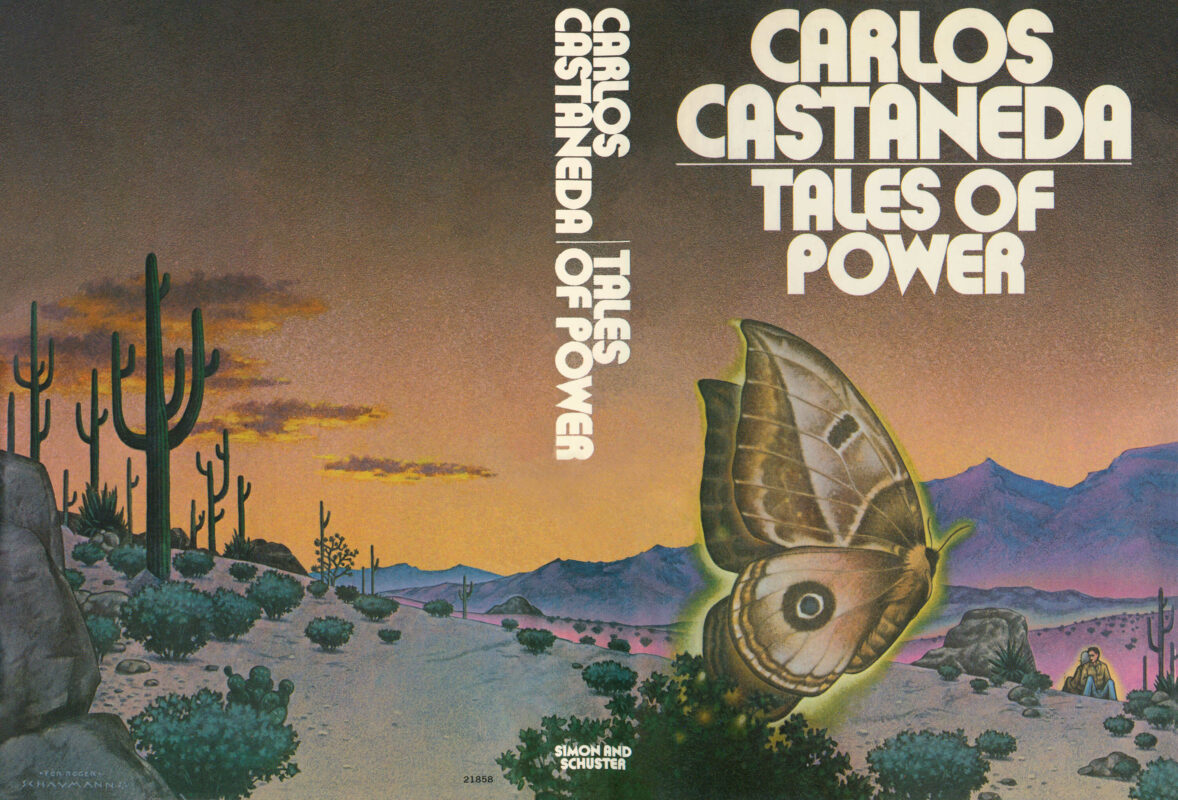
In this chapter, Don Juan and Don Genaro initiated a series of challenging tests designed to push me beyond my conventional understanding, culminating in a demonstration of “the secret of the luminous beings.” Through exercises in focusing my will and stopping internal dialogue, I experienced profound perceptual shifts, such as witnessing “the ally” as a moth and “seeing” people as energetic forms. Don Juan explained that all beings are luminous and that our perception is governed by an “assemblage point” that can be moved through discipline and personal power. The chapter concluded with Don Genaro’s astonishing reappearance, which further blurred the lines between ordinary reality and the sorcerers’ world, emphasizing that my reason alone was insufficient to grasp these events and that true understanding lay in direct perception and the cultivation of my will.

A Witness to the Acts of Power – The Secret of The Luminous Beings Read More »

The Tonal and the Nagual – Having to Believe

In this chapter, I met Don Juan in Mexico City, where he appeared in a suit, a deliberate incongruity designed to challenge my perception. He emphasized the warrior’s need for “impeccability” and “humbleness” over self-confidence, asserting that true understanding comes from accumulating personal power rather than seeking convenient explanations. Through the vivid retelling of my dream-control experiences and a symbolic story about two cats, Don Juan introduced the crucial distinction between merely “believing” and “having to believe”—the latter being a warrior’s conscious choice to accept unfathomable realities, particularly the omnipresent nature of death, as a source of power and mystery, exemplified by a dying man we observed in the park.

The Tonal and the Nagual – Having to Believe Read More »

The Tonal and the Nagual – The Island of The Tonal

In this chapter, Don Juan introduces the concepts of “tonal” and “nagual” as the two fundamental aspects of every human being, dispelling my anthropological preconceptions. He explains that the tonal is the “social person,” the organizer of the world, encompassing everything we know, perceive, and can talk about, forming an “island” of our known reality. Conversely, the nagual is the indescribable, unknown part of ourselves, existing “beyond the island,” the source of power and creativity that cannot be grasped by reason but only experienced. Don Juan uses various analogies, like items on a table, to illustrate these abstract concepts, emphasizing that the tonal, though crucial for navigating the world, often becomes a “guard” rather than a “guardian,” suppressing the awareness of the nagual. He stresses that true knowledge lies in recognizing and balancing these two aspects, a challenge for any warrior.

The Tonal and the Nagual – The Island of The Tonal Read More »

The Tonal and the Nagual – Shrinking the Tonal

In this chapter, Castaneda recounts a disorienting experience in which Don Juan “shrinks” his tonal, causing him to be instantly transported a mile and a half away from an airline office to a bustling market. Don Juan explains this phenomenon as a deliberate manipulation of Castaneda’s tonal—the organizing principle of his known world—by startling it into a state of “shyness” or contraction, thereby allowing the nagual to temporarily take over and perform extraordinary feats. Castaneda struggles to reconcile this inexplicable event with his rational mind, prompting Don Juan to emphasize that such experiences exist beyond the realm of reason and are apprehended only through the body, in what he calls “nagual’s time.” The chapter concludes with Don Juan reiterating the importance of a fluid, balanced tonal for a warrior, and hinting at further explorations of the nagual with Don Genaro.

The Tonal and the Nagual – Shrinking the Tonal Read More »

The Tonal and the Nagual – In Nagual’s Time

Carlos recounts his Thursday return to the market where don Juan had “shoved” him, only to find the coin and book stands only appear on Sundays, confirming the unreality of his previous experience. Don Juan and don Genaro appear, teasing him about his physical appearance. Don Genaro demonstrates extraordinary feats like standing horizontally on a tree trunk and gliding through the air, which Carlos struggles to comprehend and often experiences with physical discomfort or an altered state of perception. Don Juan explains that these are manifestations of the nagual, a non-rational aspect of reality, and emphasizes the importance of a clean tonal (the rational self) to interact with the nagual without being overwhelmed or destroyed. He clarifies that while his role as teacher is to work with Carlos’s tonal, don Genaro, as Carlos’s benefactor, introduces him to the nagual, demonstrating its boundless possibilities, even if the “how” remains indescribable and outside the realm of rational understanding.

The Tonal and the Nagual – In Nagual’s Time Read More »

The Tonal and the Nagual – The Whispering of The Nagual

Carlos returns to Don Genaro’s house and is greeted by don Juan and don Genaro, who playfully tease him about his physical appearance. They then accompany him to a field of eucalyptus trees, where don Genaro performs gravity-defying feats, such as standing horizontally on a tree trunk and gliding through the air like an eel. Carlos experiences these events with a mix of awe, physical discomfort, and altered perceptions, such as seeing don Genaro as a furry crocodile. Don Juan explains that these are manifestations of the nagual, a non-rational aspect of reality that can only be witnessed, not explained, and that his role is to protect Carlos’s tonal (rational self) from being overwhelmed. They also discuss the importance of a clean tonal, how the nagual “splits” an individual, and the dangers of indulging in bewilderment when confronting the unknown. Don Juan emphasizes that a warrior must maintain impeccable control and distinguish between the world of the tonal and the world of the nagual, using his will to navigate between them.

The Tonal and the Nagual – The Whispering of The Nagual Read More »

Translate »